

Financial Restructuring
We realize that sometimes companies face the reality of slower growth driven by the changing economic environment. Financial Restructuring by Seeds conducts a comprehensive re-design of your company's capital structure, debt obligations, liquidity profile, asset base, financing arrangements and, if necessary, the ownership structure, to restore financial stability and improve profitability moving forward.
This allows for stable business, healthy stakeholder relationships and the building of a strong platform for the future.
When to Restructure?
Seeds normally undertakes financial restructuring for a company when its existing financial structure no longer matches its economic capacity. The distressed company might have substantial profits, yet it faces financial distress because it has one or more of the following:
Too Much Debt
Inability to Fulfill Payments on Time
Capital Draining Non-Core Assets
Short-Term Debt Financing Long-Term Assets
Declining Operating Cashflow
Foreign Currency Mismatches
Excessive Interest Expense
Insufficient Working Capital
Large
Loan Repayments
Next: A Diagnostic Assessment
After identifying that the company is in need of a financial restructuring, the next step is to ask fundamental questions and perform a complete diagnosis on different financial and operational aspects of the firm, as follows:
Liquidity
Does the company have sufficient liquidity to operate in the next 12-24 months?
Operations
Is the underlying business economically viable and capable of generating sustainable cash flow?
Debt
How much debt can the company pay back sustainably?
Capital Structure
What is the best debt-to-equity mix to support financial growth?
Assets
Which assets should be sold, monetized, or re-allocated?
Funding
Which re-financing methods are most appropriate?
Stakeholders
How should value, risk and losses be allocated among creditors and shareholders?
Third: A 7-Step Action Plan
After completing the diagnosis, we will then proceed with performing a comprehensive, 7 step action plan to restore financial health:
1
Stabilize Liquidity
2
Optimize Cost Structure
3
Determine Room for Debt
4
Restructure Liabilities
5
Optimize Assets/Capital
6
Restore Profitability
7
Create Long-Term Financial Sustainability
Fourth: Deploying the Right Tools
Now that we have established a solid action plan for the company, these are among many tools Seeds Consulting can deploy to put the firm's restructuring plan into motion:
Tool
Refinancing
Maturity Extension
Interest Reduction
Grace Period
Debt Rescheduling
Debt-Equity Swap
Equity Injection
Asset Sale
Sale & Leaseback
WC Restructuring
Covenant Reset
Sukuk/Bond
Preferred Equity
Strategic Investor
Primary Purpose
Replace Existing Debt
Reduce Near-Term Repayment Pressure
Lower Debt Burdens
Preserve Short-Term Liquidity
Match Repayments with Cash Generation
Reduce Leverage
Recapitalize Balance Sheet
Generate Cash and Reduce Debt
Monetize Fixed Assets
Release Trapped Cash
Avoid/Cure Default Covenant Breaches
Diversify Funding
Add Capital while Structuring Control/Economics
Provide Capital and Possibly Operational Capability
Additionally: Other Items to Consider for Optimal Restructuring
Seeds Consulting considers the strongest restructuring assignments combine corporate finance, valuation, credit analysis, cash-flow modeling, negotiations, capital markets, legal structuring and a turnaround strategy.
This is particularly relevant to infrastructure and real-asset businesses, where a fundamentally valuable asset can become distressed simply because the original financing structure is poorly matched to its long-term cash generation.
Lastly: A New Financial Horizon
It is very important to note that a complete or partial financial restructuring is not merely a distress tool, but a strategic shift towards new value creation.
After a thorough consultation, if management is now able to:
-
Refinance Expensive Debt
-
Extend Maturities
-
Introduce Institutional Investors
-
Issue Sukuk
-
Optimize Working Capital
-
Separate Business Units
-
Recapitalize the Company Ahead of Expansion
They are now not only in a better position financially, but are able to grow un-hinged, enhancing their strategic and creative freedom all the while restoring stakeholder confidence.
Case Study: Financial Turnaround for a Vaccine Factory
(This project was completed by our principal consultant during her time at Gulf One Investment Bank)
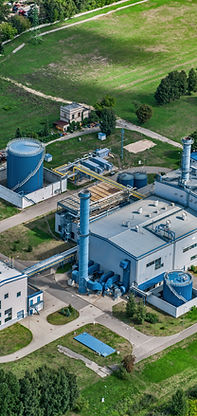
A factory in the Eastern Province of the Kingdom produces vaccines for plants. Upon in-depth analysis of the company, we found a high amount of debt and low income generation, even though they are the only factory in the Kingdom that produces such vaccines.
Our next step was to create contracts with the Ministry of Health, and perform diligent financial structuring so as to cut costs and pay a lot of the accumulated debts.
The company was valued at $25 million, and 3 years after the financial restructuring the company was valued at $250 million. A 10x increase in company value.